How She Learned to Lead With Compassion in Hard Moments
Stories of empathy-driven leadership under pressure.



Stories of empathy-driven leadership under pressure.

Empathy shaped my leadership by reminding me that people do their best work when they feel seen and supported, especially in moments of uncertainty. Leading with compassion doesn't mean lowering standards; it means meeting people where they are and helping them rise with clarity, trust, and dignity.

Leading with empathy isn't pretending something isn't or didn't happen; it's about acknowledging how the employees feel and providing them with the tools they need to get through it. Feeling what your employees are feeling can make being a leader very difficult. But providing them with the tools they need to overcome is worth it.

When leading through difficult times I recall the gifts of empathy that were given to me during tragic personal loss. Compassionate leadership means slowing down enough to truly see, hear, and understand what people are experiencing beyond their work roles. Empathy in action shows up through patience, flexibility, and a willingness to meet people where they are while still guiding them forward with clarity and steadiness. When leaders lead with care, they create the psychological safety and trust that teams need to remain resilient, connected, and committed to thriving.

Empathy shaped my leadership skills by waking up one morning and saying to myself I can overcome anything with the endurance and strength that my heavenly Father gave me and have and I am still striving to achieve any other goals I set out to do and encourage anyone that they can too.

I weather life's storms by strengthening and building myself up walking/living by faith and when I am strong, I can meet others where they are in life, so when situations arise, I can lead with my cup filled and an abundance of compassion. I remember people are human beings and I offer them grace-just as I would hope others would extend to me in times of sincere need.

Empathy reshaped my leadership when I learned to stop entering spaces as the expert and start entering them as a partner. Whether I'm working in tech or with educators and families, I lead by listening first, honoring lived experience, and building solutions together instead of assuming I know what people need.

Silence taught me empathy. Spending years believing I had nothing to say taught me to notice everything and everyone.

Leadership is about the ability to relate and connect with people to help inspire, motivate, and uplift them. We are all the creators of our own lives, and having a supportive leader who can show these qualities empowers others both professionally and personally.

Empathy allows me to put myself into my team position and try to see things from their perspectives and emotions. It allows me to navigate change effectively and implement decisions through effective communication.

My recent (and late) ADHD diagnosis taught me that women and girls are often mislabeled as 'too much' or 'not enough' when we're really just masking struggles no one bothered to see. Understanding how my brain is wired gave me a new perspective and helped me release expectations - not standards. I spent decades unknowingly compensating and expecting others to hustle as hard as I did. Now I look for what people might be carrying beneath the surface, especially the women and kids who've learned to be "ok" while falling apart inside.

How empathy has shaped my leadership. Empathy has given me an ear to listen, it has provided me with patience and compassion for my community and those who are struggling emotionally or mentally, especially in the young communities. It has given me a sense of chance to open or build opportunities for those that have a similar passion as me and enable them to grow, take advantage, encourage others and find positive solutions to their challenges. It has too taught me that leadership is not about leading people, it's about being able to help others, to understand what they need and take responsibility in any position that needs to be filled.

Empathy shaped my leadership by teaching me to slow down and truly listen; especially when people were navigating fear, grief, or uncertainty. During difficult moments, I learned that leadership isn't about having all the answers; it's about creating safety, offering steadiness, and honoring people's lived experiences.

Finding, by third grade, a significant number of students with articulation and language deficits who were not learning to read and write was heartbreaking, especially when parents told me how it was affecting homework and emotions in the evenings. Then, when the school schedules and other curriculum time requirements could not flex to allow adequate time for therapy to support the students, I was challenged to modify therapy strategies and the amount of time to meet the students' needs.

Leading with empathy has rewarded me with the ability to connect with someone through an unspoken language . Embracing shared feelings and experiences, created unexpected lifelong friendships.

Empathy informs everything that I do. I have lost my father and my best friend to cancer. I have been through a challenging divorce. People often confuse sympathy and empathy. But when you can stand in someone else's shoes with empathy, it's not hard to see why things might feel challenging. And once you do that, you often unlock new ways to help them see a path forward – even if that means sitting in the discomfort of the present along the way.

I lead with empathy because people don't forget how you made them feel when things were hard. Compassion turns leadership from authority into trust.

I learned to lead with compassion in difficult moments by remembering that we are more alike than different, and that everyone carries challenges we cannot see. I've come to understand that it's not what happens to people that defines their character, but how they respond. This awareness guides me to meet others with grace, empathy, and compassion—rather than judgment.

I think you must remember who you are when times get challenging, and not lose focus even if it hurts; and never give up. I try to ask myself what I would do in that situation and hope that I would find someone as eager to help as I am.

Empathy shaped my leadership when I chose compassion over control. During a season when a team member faced grief, illness, and loss, I realized I could not place a timeline on healing and that leadership means building systems that honor both results and the human heart behind them.

Empathy shaped my leadership by reminding me that the 'how' of our actions echoes far longer than the 'what.' How we lift each other up is the legacy we actually leave.

I lead with empathy by always assuming best intentions. In a difficult team dynamic, that choice helped turn misunderstanding into alignment and foster a more connected, respectful environment.

As a birth photographer, I've been through quite a few tough situations while documenting life. From plans going smoothly to last-minute emergencies, I strive to offer comfort and peace during the unknown.

Leading with compassion taught me that trust is the real currency of leadership. When empathy is present, alignment deepens and impact grows at the pace of trust.

When I think about empathy, I recall the words of Maya Angelou: "We must support each other and empathize with each other because each of us is more alike than we are unalike."

If you look around, you can always find someone that has a more challenging situation than you. I have one client who only has one eye and is on a walker and another client that is over 100 years old! They continue to stay committed to doing all they can! I have such respect and admiration for them I realize that my problems are very small next to theirs!

Empathy has guided every interaction of my leadership at Never The Less, shaping how we listen, support, and advocate for the most vulnerable youths.

We all have the ability to influence someone whether we are an appointed leader or just have a following due to respect or tenure. But when those people you influence see you have empathy, that's what separates you as a leader that has character. That's a more of an example of what people should follow.

Leading with empathy meant slowing down enough to understand what people were carrying, not just what they were producing. Everyone is dealing with something, and compassion turned difficult moments into opportunities for meaningful connection instead of conflict.

Empathy shaped my leadership by honoring where people have been without allowing it to limit where they're going. Because of empathy, I lead in the space where resilience is respected and hope is given time and structure to take root.

Seeing beneficiaries in real life grounds my leadership in empathy and it turns abstract goals into human responsibility. When motivation wavers, focusing on the people I help reminds me why the work matters and keeps me moving forward.

Empathy changed the way I lead because I stopped seeing people as tasks and started seeing them as stories. That shift made my leadership more human and more healing.

Empathy is essential for leading across cultures and through global complexity, particularly when a project holds more ambiguity than clarity. When people trust that early missteps aren't fatal, they speak up faster, think more boldly, and collaborate with a deeper sense of safety and sincerity.

During my hardest seasons, empathy reminded me that everyone is fighting battles you can't see. My faith taught me to lead with patience and compassion first, especially when stress and uncertainty were highest.

Empathy isn't soft, it's the most resilient tool we have for delivering results and strengthening relationships. When we lead with humanity, we build more than projects, we build trust, momentum, and lasting impact.

For me, empathetic leadership means creating clarity. It's about deeply understanding what my customers truly need and framing our goals in a way that turns a simple conversation into a powerful, shared vision.

During difficult moments, empathy helped me slow down long enough to understand how others were experiencing me, not just what I intended. Having that clarity helped turn tension into an opportunity to build trust and guided my actions into greater alignment.

Leading with empathy means listening first, especially in difficult moments. When people feel seen and supported, trust grows, and real, lasting change becomes possible.

I reconnect with empathy in hard moments by remembering that the world is composed of individuals who want to and need love. We are all families and friends. If we connect enough with compassion we can go from community, to nation, to world peace. The uninhibited flow of knowledge and wisdom from such a state would be the ultimate wealth.

Empathy shaped my leadership by changing the way I measured success. It stopped being about how fast something got done and became about how people felt while getting there. During difficult moments, empathy meant slowing down when everything around me was pushing for speed. It meant listening beyond the words being said and noticing what wasn't. Fear, burnout, grief, and uncertainty do not show up neatly on a calendar invite, but they show up in performance, trust, and morale. Leading with compassion required creating space for honesty, even when the answers were uncomfortable or unfinished. I learned that empathy is not the absence of accountability. It is the foundation of it. When people feel seen and respected, they take more ownership, not less. They speak up sooner. They stay engaged longer. They trust that leadership decisions are being made with them in mind, not just about them. In moments of change or crisis, empathy guided how I communicated. I focused on clarity over corporate polish and humanity over perfection. I acknowledged what I did not yet know, named what was hard, and stayed present instead of distant. That consistency built psychological safety at a time when people needed it most. Empathy did not make leadership easier. It made it more honest. And in the hardest moments, honesty paired with care became the most effective leadership tool I had.
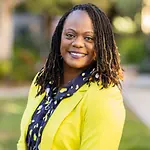
My story does not begin with privilege, certainty, or a carefully curated plan. It begins with disruption. I was a teenage mother. A high school dropout. Navigating life far earlier (and far harder) than most people ever see from the outside. Life was not normal for me, and because of that, I learned something early: how people show up in the world determines how the world responds to them. Long before I had language for it, I was learning how attitude, assumptions, and expectations shape connection, opportunity, and survival. That lesson would later become my life's work. I found my way into education not as a traditional pathway, but as a calling. Over the course of more than two decades, across schools, correctional education, nonprofits, and international systems, I observed something consistent and unavoidable: when relationships fracture, everything else follows. Learning stalls. Teams erode. Cultures collapse. What most systems try to fix with policies, I saw rooted in people. That realization led me to develop what is now known as the AAE™ Framework: Attitude, Assumptions, and Expectations. It is not theory for theory's sake. It is a lived, tested framework grounded in how humans actually connect, protect themselves, and present in the world. It explains how people enter rooms emotionally before they ever speak, how assumptions quietly harden into barriers, and how unspoken expectations strain even the strongest relationships. The framework also became a mirror for leaders, teams, and for me. Through my leadership work, including my time with Five Keys Schools and Programs, I leaned into the responsibility of not just building systems, but building people. How we see ourselves. How others experience us. How we regulate, relate, and repair when things break down. Culture, I learned, is not what we say; it's what we repeatedly signal through our presence. In 2026, my work expands onto a global stage. I will speak across five international locations, beginning in Bangkok, Thailand, at the 17th Annual Women's Leadership and Empowerment Conference, where I will address how internal regulation and relational awareness shape women's leadership and global impact. From there, my work moves to London, where my book will be featured at the London Book Fair (March 10–12), a milestone that reflects not just authorship, but the global relevance of conversations around connection and culture. Next, I will present in Barcelona, Spain, at the Euro-Global Women's Forum 2026, sharing how the AAE™ Framework equips leaders to navigate complexity, conflict, and influence across borders and systems. The final two engagements bring the work home to the United States; first in Knoxville, Tennessee, at the PACE Teaching & Learning Conference (March 26–27), and then in Orlando, Florida, at the Global Summit on Women's Leadership and Empowerment 2026, where I will join the Scientific Collegium in advancing leadership thought at the highest level. This is not a speaking circuit for visibility alone. It is a mission. I am driven by a deep desire to leave a meaningful mark on how the world heals connections, strengthens teams, and restores humanity in leadership. We are living in a time where disconnection has become normalized; burnout, polarization, and mistrust are no longer exceptions; they are conditions. My work exists to interrupt that pattern. How did I do it? I refused to let my beginnings define my ceiling. I listened to mentors who saw potential before I did. I stayed willing to grow uncomfortable. And I learned to master how I connect with people, how I show up, how I'm perceived, and how intentional presence can open doors that credentials alone never will. Today, as an author, speaker, and culture strategist, I stand not as someone who "made it," but as someone committed to helping others build it—within themselves, within their teams, and within the systems they lead. This isn't just my story. It's an invitation to lead differently.

Working in education, empathy reminds me that every behavior tells a story. Leading with compassion helps me support the whole child, and the whole community, especially during challenging times.

Some of my hardest leadership moments taught me that compassion is not about having all the answers, but about being present, honest, and human. By leading with empathy, I learned to support people through uncertainty while keeping trust, communication, and the needs of those we serve at the center of every decision.

Empathy shaped my leadership by reminding me that people are more than their performance; they carry stories, struggles, and strengths. When I lead with understanding, trust grows and real change becomes possible.

Leading with compassion wasn't something I learned from a textbook — it was shaped by experience. When I moved to the United States from Hungary, I didn't speak or understand English. Navigating a new country, culture, and industry taught me early on what it feels like to be unseen, uncertain, and vulnerable. That experience became the foundation of my leadership style. In the beauty education world, I work with students who often arrive carrying fear, self-doubt, or personal challenges they don't always voice. I learned quickly that leadership isn't just about instruction — it's about listening. Empathy allows me to meet people where they are, especially during difficult moments, and guide them forward without judgment. There have been times when students struggled academically, financially, or emotionally. Instead of leading with pressure, I chose to lead with understanding. Compassion doesn't mean lowering standards; it means recognizing that everyone's path looks different. By offering patience, encouragement, and consistency, I've seen students regain confidence and push through obstacles they once believed would stop them. Empathy also shaped how I show up as a leader behind the scenes. Whether managing expectations, navigating challenges, or supporting colleagues, I've learned that calm communication and respect build trust. People don't just want to be led — they want to feel supported. Leading with compassion during hard moments has taught me that influence is rooted in humanity. When people feel seen and valued, they rise. That belief continues to guide how I teach, mentor, and lead — especially when it matters most.

I learned to lead with compassion because hard moments don't just test strategy—they test humanity. In the toughest seasons, I saw how quickly fear and uncertainty can impact trust, communication, and performance. That's when empathy matters most. For me, it shows up in how I listen before I solve, ask "What do you need to be successful right now?", and hold high standards while still honoring that people are whole human beings. Compassion doesn't lower the bar—it strengthens the bridge. When people feel seen, safe, and respected, they stay engaged, they contribute, and they rise. And that's the kind of leadership I'm committed to.