How She Made Peace With Who She Used To Be
Women reflecting on their past selves with compassion instead of judgment.



Women reflecting on their past selves with compassion instead of judgment.


Growth begins when comfort ends. Every time you level up, something you outgrew gets left behind.

Making peace with my past self wasn't a single moment. It was the cumulative effect of raising two sons, surviving personal upheavals, rebuilding a career I'm fiercely proud of, and finally giving myself permission to set boundaries. I learned to speak up without apology, to advocate for myself the same way I advocate for my team, and to stop viewing past chapters as liabilities. They're assets that inform my leadership, sharpen my intuition, and keep me grounded. Today, I don't disown the woman I used to be. I thank her. She carried me through seasons I didn't think I'd survive, and she gave me the raw material I needed to become the woman I am now. And that acceptance, more than any title or accolade, is what truly feels like success.
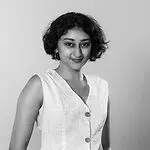
I grew up in the outskirts of Hyderabad, India, specifically a small village called Bachupally, which was still in its early stages of development when I moved there. At the time, the community was heavily influenced by traditional gender roles and cultural expectations. I often felt at odds with these norms, feeling like an outsider in my social circle. While most of my peers were involved in typical activities, I found comfort in the films of directors like Hitchcock and Wong Kar Wai, even though those around me didn't share the same interests. From a young age, I gravitated toward unconventional forms of expression, exploring what was often seen as "peculiar art" and enjoying films that were considered "unorthodox" in my community like Jodorowsky's 'The Holy Mountain' or Gasper Noe's 'Enter the Void'. I loved the idea of using art to push boundaries of self-expression. Driven by a desire to transcend the societal constraints pervasive in Indian culture, I wholeheartedly dedicated myself to academic pursuits, following in the footsteps of my parents. It felt like that was the only true way to be accepted by society. Despite being inherently inclined towards art and film, my educational journey led me towards the field of architecture, with the hope of discovering my authentic voice along the way. I was never exposed to filmmaking as a path until my later years in college. Midway through my academic journey, the onset of the pandemic coincided with a personal challenge—the diagnosis of two herniated discs in my lower back. This period of adversity, though physically debilitating, granted me invaluable opportunities for introspection and personal growth. I vividly recall how movies and shows became my lifeline during that challenging time. From classics like Hitchcock's 'Psycho' and Lynch's 'Blue Velvet' or discovering movies like 'The Handmaiden' and 'Burning', my passion for storytelling only deepened. It was during this period of physical immobility that my appreciation for storytelling evolved into a profound recognition of its transformative power. I truly discovered the impact of a compelling narrative and the beauty of visually captivating frames. In my later years at Arch school, I delved deeper into a newfound passion for spatial storytelling. I decided that I would present the intersection of film and architecture for my B.Arch Thesis project - a very unconventional move in Arch school. My dissertation was titled "Understanding the Filmic Portrayal of Elements in Space Through the Study of Satyajit Ray's Films to Examine the Human Emotional Relationship with the Built Environment." Despite my physical challenges, I fully committed to this project, recognizing it as a perfect blend of my love for cinema and the architectural principles I had studied. Through in-depth analysis and discussions with my mentor, I explored the intricate relationship between spatial design and emotional impact in films. This revelation sparked a deep commitment to the art of spatial storytelling, ultimately leading me to pursue a career as a production designer. Taking the leap of faith to apply to one of the best film schools in the world, with no prior film experience and moving to an entirely different continent with many financial hurdles was in a weird way my acceptance of me. It was the toughest move of my life, leaving my community behind to pursue my true passion was definitely hard to make peace with but looking at all the things I have accomplished in the last two years, and the countless movies I've designed for, I definitely see the growth and transformation. The biggest win for me is that I am no longer in pursuit of being accepted by society nor am I trying to fit in. Being unconventional and staying true to my authentic self has paved the way for me and that is how I have learnt to make peace and accept myself.

For a long time, I carried shame about the earlier versions of me who were just trying to stay upright in a life that never stopped shifting. I thought strength meant keeping it together at all costs. Then everything changed. My mother died, and two weeks later her mother died too. Suddenly I was the oldest woman left in the line, standing in a place I never expected to be so soon. There is nothing tidy or elegant about that kind of grief. It strips you down. It forces you to meet every version of yourself you've ever been. At first, I was hard on myself. I felt like I should have handled it better. I should have been calmer, wiser, more ready. But the truth is, none of us are ready for the moment we lose the people who shaped us. Eventually I stopped judging the younger me. I started seeing her clearly. She was the one who pushed through chaos, who kept rebuilding her life, who carried me through things she never had support for. She wasn't weak. She wasn't failing. She was surviving with everything she had. Making peace with her changed me. I became steadier and more open. I learned to stop apologizing for being human and to honor the resilience that comes from loss, reinvention, and getting back up every single time. Accepting who I was is what shaped who I am now. And it's why I can sit with people in their hardest seasons without looking away.

Mistakes and misconceptions that I was ashamed of in the past were simply everything that was once used to keep my dreams down or held back from my age to disabilities, such as my seizure condition, which I have just learned is connected to a heart condition that was overlooked. I have learned to overlook the age issue because it's not when you start, it's how much faith you put into your dreams. As for the disability, it's become a strength because it strengthens my empathic abilities, which in turn helps me write gripping, heart-wrenching scenes that stay in the mind long after the book has been closed.

When I reflect on my earlier self, I see a young girl who learned early how to be observant, self-reliant, and cautious about taking up space. I was shy, uncomfortable speaking publicly, and content staying in the background. Those instincts came from navigating an environment where resilience mattered more than visibility. As a teenager and young adult, my desire for independence sometimes led me to take unconventional paths. For a time, I struggled with how those choices were perceived by others. What I eventually learned, however, was that those decisions were not failures—they were steps toward clarity. Each experience strengthened my resolve to build a life defined by intention rather than circumstance. Making peace with that version of myself came through empathy and perspective. I came to understand that she was not lost or lacking direction; she was determined to create her own path, even without a clear map. Returning to education, recommitting to growth, and later starting over in a new country required resilience, discipline, and belief in myself—qualities that had been there all along. Accepting my earlier self has shaped the leader I am today. It has grounded me in compassion, strengthened my confidence, and reinforced my desire to open doors for others. I am deeply motivated to be the person who sees potential early, encourages courage, and reminds others—especially young people—that their future is something they have the power to design.

For a long time, I thought I needed to hide the woman I used to be. I thought she was the liability. The messy chapter. The version of me that didn't fit the polished narrative of success. I felt like I had to outgrow her. Distance myself from her. Be ashamed of her. But the truth is, she is the reason I am here. That past version of me had to happen. The mistakes. The risks. The chaos. The ambition without a blueprint. The heart that refused to harden even when it probably should have. She taught me resilience before I had language for it. She taught me grit before I knew how to call it discipline. She taught me how to stand back up after being underestimated, dismissed, doubted, and broken. There was a season when I thought she was something to clean up. To tone down. To rewrite. Now I know she sparked the fire that still burns in me. She is the reason I refuse to quit. She is the reason I bet on myself. She is the reason I know how to survive pressure, rebuild after loss, and keep going when things get uncomfortable. She wasn't well behaved. She didn't play small. She didn't stay quiet. She didn't wait for permission. And well behaved women rarely make history. She challenged rules. She tested limits. She spoke when it would have been easier to stay silent. She wanted more when she was told to settle. She is not my shame. She is my power. Every bold decision I make today carries her fingerprints. Every risk I take has her courage in it. Every room I walk into with confidence is built on the backbone she forged. I no longer hide her. I honor her. Because the woman I am today stands on the shoulders of the woman I once was. She lit the match. I keep the fire alive.