Ekta Ghosh
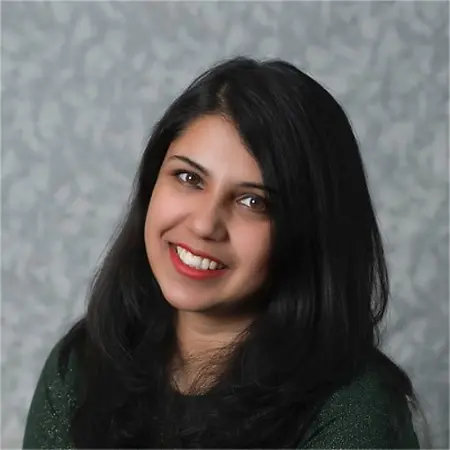
Dr. Ekta Ghosh is an early childhood education researcher with expertise in inclusive practices, social-emotional learning (SEL), and early language and literacy development. She earned her Ph.D. in Curriculum and Instruction from the University of Denver, where her dissertation explored the effects of dialogic reading interventions on language outcomes for young dual language learners. Her doctoral research reflects a strong foundation in research design, rigorous data collection and analysis, and evidence-based intervention evaluation.
Throughout her academic and professional career, Dr. Ghosh has contributed to federally and foundation-funded research projects, collaborating with multidisciplinary teams and partner institutions including the Yale Child Study Center. Her experience spans project coordination, direct child assessment, mixed-methods analysis, grant proposal development, and dissemination through peer-reviewed publications and national conferences. She is committed to advancing inclusive, culturally responsive approaches that support equitable school readiness and SEL outcomes for children from diverse linguistic and developmental backgrounds.
As an instructor and mentor, Dr. Ghosh has taught undergraduate and graduate courses in special education and early childhood intervention, fostering learner-centered environments grounded in ethical and reflective practice. Her scholarship and teaching are driven by a passion for linking research with practice to improve educational opportunities for children, families, and educators.
• Ph.D. in Curriculum and Instruction
University of Denver, Morgridge College of Education — Denver, CO | 2024
Dissertation: Impact of Dialogic Reading Practices on the Language and Literacy Development of Young Dual Language Learners
Advisor: Dr. Rashida Banerjee
• M.A. in Education
Jadavpur University, Department of Education — West Bengal, India | 2013
Honors: Second position overall in the University
Project: Awareness among special educators in the use of assistive technology while teaching children with disabilities
• B.Ed. in Education
Loreto College, University of Calcutta — West Bengal, India | 2014
• Award of Excellence, Special Olympics Bharat, West Bengal — Recognition for contributions to Early Childhood and Early Childhood Special Education
• University of Denver Dissertation Fellowship Award
• Research Impact Award, Colorado Educational Services Association (COESA) & Morgridge College of Education
• Winifred R. Reynolds Scholarship, Denver Foundation — Three-time recipient for contributions to early childhood education
• Teaching, Learning, and Scholarship (TLS) Giving Fund Award — Four-time recipient for conference presentation support
• COESA Conference Grant — Four-time recipient for national and international conference presentations
• State Eligibility Test (SET) — Qualified for Assistant Lecturer (India)
• Academic Distinction, Jadavpur University — Second position overall in the M.A. in Education program
• Academic Distinction, Loreto College — Fourth position in the B.Ed. program
• Council for Exceptional Children (CEC)
• Division for Early Childhood (DEC), Council for Exceptional Children
• DEC DECIDE (Division for Early Childhood – Diversity, Equity, and Inclusion Development and Engagement)
• American Educational Research Association (AERA)
• Voluntary Teaching Assistant, CFSP 4315: Professional, Leadership, and Ethical Issues in Special Education — University of Denver (2021–2022)
• Volunteer Teacher, Billie Martinez Head Start School (2019)
• Volunteer Educator, Manovikas Kendra (School for Children with Disabilities), India (2018)
• Conference Proposal Reviewer (Volunteer), Division for Early Childhood (DEC) Annual Conference (2023)
• Journal Manuscript Reviewer (Volunteer), Topics in Early Childhood Special Education (2024)
• Student Representative, Curriculum & Instruction Program, University of Denver (2020–2021)
• Community Engagement Volunteer, Ram Krishna Mission School for the Visually Impaired — Organized educational quiz programs (2016–2017)
• Coordinator (Volunteer), Open Distance Learning Teacher Training Program, India (2017–2019)
What do you attribute your success to?
I attribute my success to a combination of persistence, strong mentorship, and a deep commitment to linking research with practice. My academic journey across diverse educational systems in India and the United States has taught me to be adaptable, reflective, and resilient while maintaining rigorous scholarly standards. I have been fortunate to work with mentors and interdisciplinary teams who emphasized methodological rigor, ethical research practices, and the importance of translating research findings into meaningful outcomes for children, families, and educators.
Equally important has been my ability to collaborate across roles—as a researcher, instructor, interventionist, and program coordinator—which has strengthened my organizational skills, leadership, and capacity to manage complex, multi-site projects. Finally, my success is grounded in a values-driven approach to equity and inclusion, which motivates me to pursue research that addresses educational disparities and supports culturally and linguistically diverse learners.
What’s the best career advice you’ve ever received?
The best career advice I received was to focus on doing meaningful, rigorous work rather than chasing titles or timelines. A mentor once told me that impact and credibility come from consistently asking important questions, engaging deeply with the communities involved, and being open to learning at every stage of my career. That advice encouraged me to prioritize research quality, collaboration, and integrity over speed.
This perspective has guided my approach to scholarship and practice—whether designing research studies, working on interdisciplinary teams, or mentoring students. It has helped me remain resilient, intentional, and grounded in my purpose, particularly in a field where progress is often incremental but deeply consequential.
What advice would you give to young women entering your industry?
I would encourage young women to trust their expertise and take their work seriously, even when others may not immediately do so. Academia and research can be demanding, and it is important to advocate for yourself—whether that means asking questions, seeking mentorship, or pursuing opportunities that align with your values rather than external expectations. Building a strong support network of mentors and peers is just as important as individual effort.
I would also emphasize the importance of resilience and self-compassion. Progress in research and education is rarely linear, and setbacks are part of the process. Staying grounded in purpose, maintaining intellectual curiosity, and remembering why the work matters—especially when it supports equity and inclusion—can help sustain both professional growth and personal well-being over time.
What are the biggest challenges or opportunities in your field right now?
One of the biggest challenges in early childhood education and research is bridging the gap between evidence-based practices and real-world implementation, particularly in under-resourced and linguistically diverse communities. While research on SEL, early literacy, and inclusive practices has grown significantly, educators and programs often face systemic barriers—such as limited funding, workforce shortages, and competing policy demands—that make sustained implementation difficult.
At the same time, this challenge presents a significant opportunity. There is growing recognition of the importance of early childhood mental health, social-emotional development, and culturally responsive instruction, along with increased investment in interdisciplinary and community-based research. Advances in data systems, implementation science, and technology also offer new ways to support early identification, professional learning, and scalable interventions. For the field, the opportunity lies in developing research-practice partnerships that center equity, amplify practitioner voices, and translate rigorous research into accessible, sustainable solutions for children and families.
What values are most important to you in your work and personal life?
quity, integrity, and compassion are the values that guide both my professional and personal life. In my work, equity shapes my commitment to inclusive, culturally responsive research and practice that centers the strengths of children, families, and communities, particularly those who have been historically marginalized. Integrity is essential to how I conduct research, collaborate with colleagues, and mentor students—ensuring rigor, transparency, and ethical responsibility in all aspects of my work.
Compassion grounds my approach to teaching, leadership, and relationships. It reminds me to listen deeply, remain reflective, and balance high standards with empathy. Together, these values help me stay aligned with my purpose, sustain meaningful collaborations, and contribute work that is both impactful and humane.
Milestone Moments
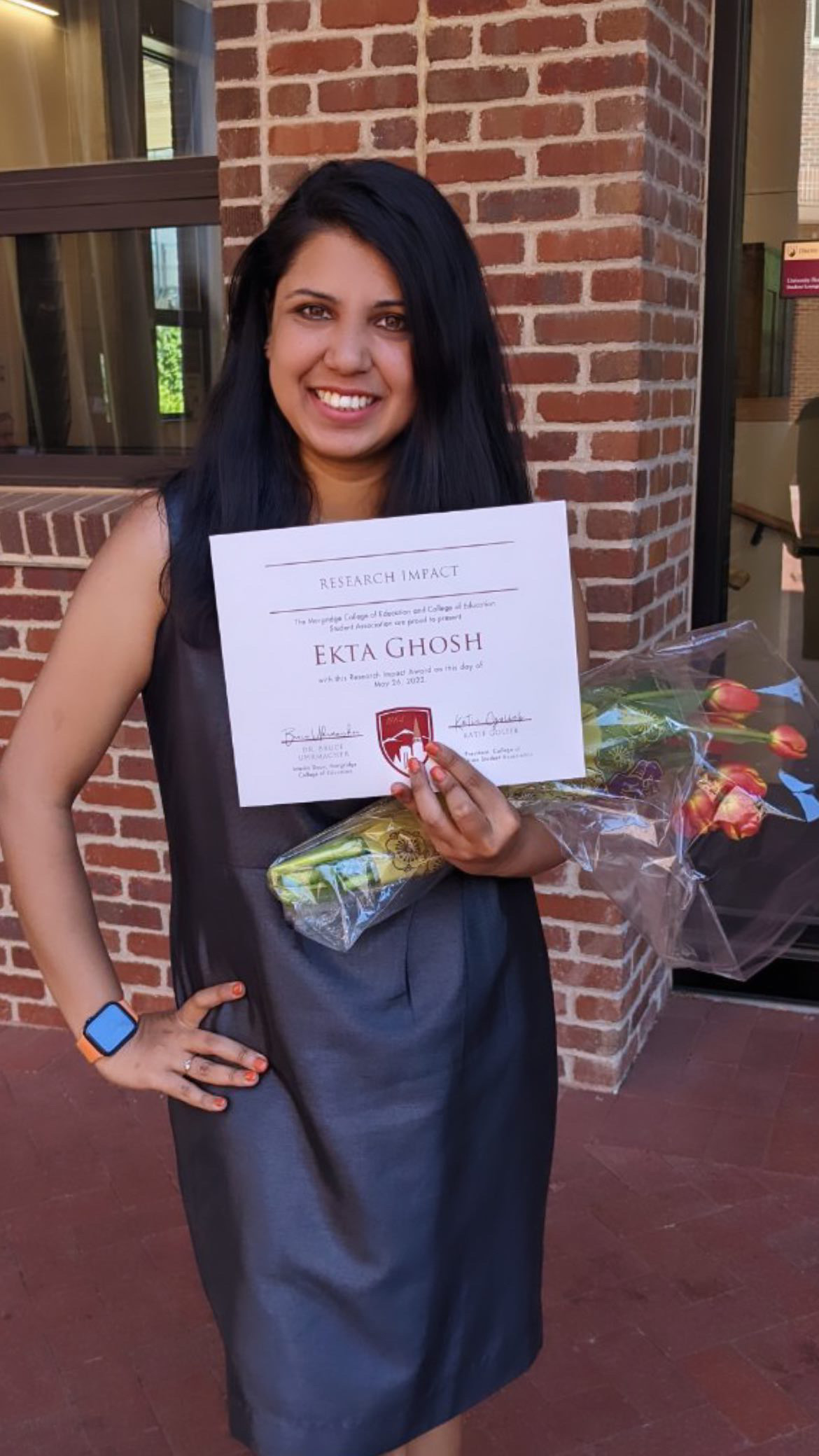
A proud milestone in my research journey, honored to see this work recognized and grateful for everyone who supported me along the way.
Locations
University of Denver
Denver, CO