Celeste Riley
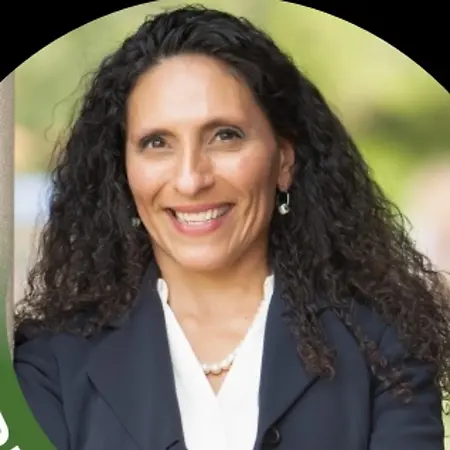
Celeste Riley is a bilingual educational leader, founder, and systems innovator dedicated to advancing literacy, technology, and equity for multilingual learners and historically underserved communities. Her work sits at the intersection of Language, Literacy, Logic, and AI, grounded in the belief that high-quality education should both affirm identity and prepare students to lead in a rapidly evolving digital world.
With over nine years of experience across K–12, adult education, nonprofit, and higher education systems, Celeste has served as a Reading Specialist, Computer Science educator, Dual Language Lead Teacher, and instructional leader in Memphis-Shelby County Schools. Her data-driven, culturally responsive instructional approach has resulted in one to two grade levels of student growth in a single semester, earning her multiple nominations for Teacher of the Year and Reading Specialist of the Year. She is particularly known for building educator capacity—designing and leading professional development in the Science of Reading, UFLI implementation, ESL integration, and computational thinking.
Celeste is the founder of CelestED Consulting PLLC, where she partners with schools, districts, and families to drive transformative outcomes for English language learners through her research-backed L³AI™ methodology (Language × Literacy × Logic with AI). Her work integrates structured literacy, culturally relevant pedagogy, and emerging AI tools to ensure learners—both children and adults—gain access to rigorous instruction, future-ready skills, and leadership pathways.
Her leadership extends beyond the classroom. Celeste has served as a Student Commissioner for the Tennessee Higher Education Commission and a Student Trustee for the University of Memphis, contributing to governance and policy conversations around access, equity, and postsecondary success. She is a four-year facilitator with the Parent Leadership Training Institute (PLTI) Memphis, where she supports parents as civic leaders and advocates, and has collaborated with organizations such as Latino Memphis, MICAH, and 901 Vecindarios. As a current teacher union leader with the Tennessee Education Association (TEA) and the United Education Association (UEA), she works collaboratively with district leadership to support educators, improve planning structures, and advance equitable working and learning conditions across schools. She is also a TECA Alumni and an AIedu Cohort Member, further strengthening her leadership at the intersection of education, innovation, and emerging technology.
Committed to developing the next generation of educators, Celeste mentors preservice teachers from the University of Memphis, Rhodes College, and Liberty University, coaching them in instructional practice, reflective leadership, and culturally responsive pedagogy.
Celeste holds a Master of Liberal Studies from the University of Memphis, with a focus on educational psychology and ESL equity, and a Reading Specialist credential from Christian Brothers University. She is currently completing the National Aspiring Principals Fellowship through Bank Street Graduate School of Education and a Johns Hopkins University certification in AI for Business Strategy. Fluent in Spanish and English, she brings a global, multilingual lens to leadership and learning.
At her core, Celeste is a builder. Whether launching systems inside schools, founding a consulting practice, or working toward the creation of a private, all-girls STEAM² academy, she is driven by a singular mission: to help students dream boldly, act with confidence, and lead with purpose. Her work reflects a deep commitment to service, mentorship, and the belief that when education is designed with intention and dignity, it becomes a powerful engine for individual and collective transformation.
• Teaching Techniques: Creating Effective Learning Assessments
• Christian Brothers University
• University of Memphis- M.L.S.
• Southwest Tennessee Community College- A.S.
• Southwest Tennessee Community College- Associate's
• Student Outstanding Achievement Recognition Finalist
• UEA
• TEA
• PLTI
• Dress for Success
• ISTE
• ASCD
• TECA
• 7FE
• CSTA
• MIFA
• First Baptist Church of Macon
• Ashe Pregnancy Center
• Buffalo Baptist Church
• AmeriCorps VISTA
• FLETCHER MEMORIAL BAPTIST CHURCH
What do you attribute your success to?
I attribute my success to a deep love for teaching and an unwavering belief in the potential of every student—beliefs that were first shaped by my own experience growing up in the public school system. As a student, it was my 5th-grade ELA teacher who made literacy come alive, my 7th-grade Spanish teacher, who affirmed that my home language was a strength, and my 9th-grade math teacher who helped me move from struggling to succeeding. Their encouragement taught me that when educators truly see students, they can change the trajectory of their lives.
Today, I carry that lesson into my work as a multilingual educator, reading specialist, and mentor. I am deeply committed to equity in education and to the belief that every student—regardless of language, background, or circumstance—deserves access to a high-quality, rigorous education. My instructional approach blends structured literacy, culturally relevant pedagogy, and the responsible use of AI and educational technology to personalize learning, expand access, and prepare students for a rapidly evolving world.
Being nominated for Teacher of the Year reflects my dedication to meeting each student’s unique needs and designing systems that allow them to grow faster than expected. Through this approach, my students—particularly multilingual learners—have achieved one to two years of academic growth in a single semester, and I have extended that impact by coaching educators and partnering with families to strengthen instructional practice.
At its core, my work is about dignity, opportunity, and belief. I see teaching as an act of leadership—one that affirms students’ identities while equipping them with the literacy, technological skills, and confidence needed to succeed. The legacy I am working toward is one where students graduate not only with strong academic foundations, but as confident, STEAM²-ready leaders—fluent in language, technology, and ethical AI—prepared for college, careers, and a rapidly evolving digital world, and empowered to create pathways for those who come after them.
What’s the best career advice you’ve ever received?
The best career advice I’ve ever received is to be yourself and never underestimate your abilities. When you commit to developing your talents and skills, confidence grows—and with it, the courage to pursue opportunities, lead with purpose, and create meaningful impact.
What advice would you give to young women entering your industry?
The best career advice I’ve ever received is to be yourself and never underestimate your abilities. When you commit to developing your talents and skills, confidence grows—and with it, the courage to pursue opportunities, lead with purpose, and create meaningful impact.
The advice I would give to young women entering my industry is to master your craft and own your voice early. Invest deeply in literacy, technology, data, and leadership—because expertise creates confidence, and confidence creates influence. Be relentless about learning, especially as AI and educational technology continue to reshape education, and position yourself not just as a participant in change, but as a designer of it.
Seek mentors, but also trust your lived experience. Your background, language, culture, and perspective are assets that allow you to see problems others overlook and design solutions that matter. Don’t wait for permission to lead. If you see a gap, build something. If a system isn’t serving students well, learn how it works—and then work to improve it.
Finally, lead with both competence and compassion. The most effective leaders combine high expectations with deep care for the communities they serve. When you align your skills with integrity and purpose, you don’t just build a career—you create impact and open doors for others.
If you want to be a game-changer, don’t just enter the field—build the skills, confidence, and vision to lead in STEAM, where innovation, literacy, and technology converge to shape the future.
What are the biggest challenges or opportunities in your field right now?
One of the biggest challenges—and opportunities—in my field right now is ensuring that women with deep expertise and diverse perspectives are fully positioned to lead innovation. Women of color, bilingual women, women in STEAM, and women whose contributions are increasingly visible bring lived experience, adaptability, and advanced problem-solving skills that today’s complex challenges require.
In education and STEAM fields, rapid advances in AI and educational technology are reshaping how we teach, learn, and lead. The opportunity lies in ensuring that women who understand language, culture, equity, and community are guiding how technology is designed and used ethically, responsibly, and inclusively, shaping systems that reflect both human values and technical excellence.
For bilingual women and educators serving multilingual communities, there is a powerful opportunity to elevate language as an asset—leveraging multilingualism as intellectual capital in innovation, leadership, and design. Likewise, for women who step into leadership later in their careers, experience becomes a strategic advantage. Wisdom, systems thinking, and relationship-building are not supplementary skills; they are core leadership competencies.
Ultimately, the future of the field depends on whether we intentionally create pathways for women with talent, experience, and vision to move into positions of influence. When these women lead, the result is not only greater equity, but stronger, smarter, and more resilient systems that benefit everyone.
“My legacy is measured by the women who rise after me—including my seven daughters—girls who are multilingual, STEAM-ready, confident in their voice, and prepared to lead with integrity and innovation in an AI-driven world.”
What values are most important to you in your work and personal life?
The values most important to me in both my work and personal life are family, adventure, and presence. As a mother of seven daughters, family grounds everything I do—it shapes how I lead, how I serve, and how I define success. I believe meaningful impact begins at home and extends outward through the way we show up for our communities.
Adventure fuels my curiosity and resilience. Whether I’m riding motorcycles with my husband, traveling, or immersing myself in new cultures, I am energized by experiences that expand perspective and deepen understanding. Connecting across cultures reminds me that language, identity, and story are powerful bridges—insights that directly inform my work as a multilingual educator and leader.
I also value research, learning, and intentional growth. I am a lifelong learner who finds joy in studying emerging ideas, educational innovation, and technology, particularly as AI reshapes how we teach and learn. This commitment to inquiry allows me to stay grounded, adaptive, and forward-thinking.
Above all, I prioritize quality time and intentional connection. Whether I’m spending meaningful moments with my daughters, mentoring educators, or collaborating with families and colleagues, I believe presence is a form of leadership. By honoring these values, I strive to model a life that balances ambition with joy, innovation with integrity, and success with deep human connection.