Let My Voice Be Heard
An original essay adapted from my memoir Piece by Piece.

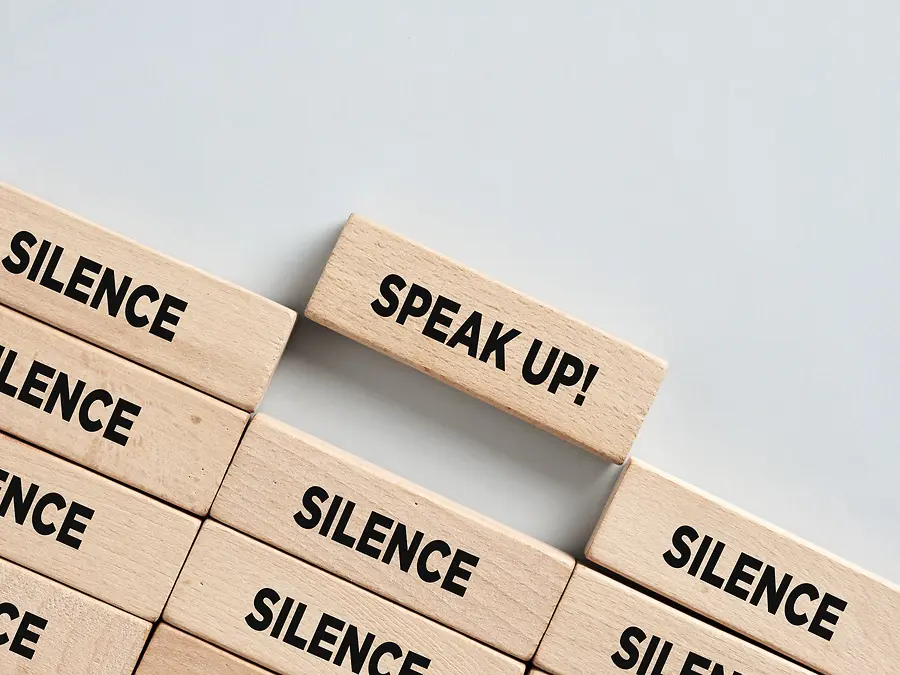
What Happens When Women Stop Waiting for Permission
For most of my life, I learned how to be quiet in ways that looked like strength.
I was a teacher, a leader, a mother, an advocate. I stood in front of rooms full of students and asked them to sing—loudly, bravely, together. On paper, I had a voice. But like many women, I learned early which truths were too much, which stories were inconvenient, and which memories were better left unnamed.
Silence, I was taught, was maturity.
Restraint.
Grace.
What no one told me was the cost.
The Cost of Silence
When women stay silent, it doesn’t always look like suffering from the outside. Often, it looks like competence. Achievement. Being “the strong one.” It looks like getting through the day, raising families, leading teams, serving communities—while carrying unspoken truths quietly inside.
For me, silence became a survival skill long before it became a habit. It kept the peace. It kept me safe—or so I believed. But silence has interest, and it compounds.
Over time, the effort it takes to hold your truth down begins to surface elsewhere—in the body, in relationships, in an exhaustion no amount of rest can fix. What we don’t say doesn’t disappear.
It waits.
When Voice Becomes a Choice
I didn’t find my voice young. I didn’t reclaim it in a dramatic moment of triumph or under perfect circumstances. I found it later—in my fifties—when the cost of silence finally outweighed the fear of speaking.
By then, I had spent decades teaching students to use their voices. To sing with conviction. To stand tall in harmony and dissonance alike. One day, the irony became impossible to ignore: I was urging courage in others while rationing it in myself.
Finding my voice wasn’t about becoming louder.
It was about becoming honest.
Honest about what happened.
Honest about what harm does when it’s minimized.
Honest about how many women are taught—explicitly or quietly—that their truth is negotiable.
From Story to Action
Speaking out didn’t end with telling my story. Once spoken, truth has momentum.
My voice led me into advocacy work, into legislative spaces where survivors are rarely centered and often politely ignored. I saw how systems praise courage in theory while resisting it in practice. I learned how easily women’s stories are welcomed as inspiration but dismissed as evidence.
And still—I spoke.
Not because it was comfortable,
but because once you know the weight of silence, you can’t unknow it.
Voice, I learned, isn’t just expression.
It’s responsibility.
What Happens When We Speak
When women stop waiting for permission, several things happen at once:
- We disappoint people who benefited from our silence.
- We surprise ourselves with our own strength.
- We give others language for what they’ve been carrying alone.
Voice is contagious. One woman speaking truthfully makes it safer for another to do the same. And another. And another.
This is how change actually happens—not all at once, not without resistance—but through accumulation. Through voices added, not erased.
Letting the Music Speak
As a music educator, I’ve always known this: a single voice matters, but collective sound changes the room.
I’ve watched students wear shirts that read Let My Voice Be Heard as they sang music about justice, loss, and hope. I’ve felt the power of voices rising together—voices that refuse to be background noise.
What I finally understood was this:
The message wasn’t just for them.
It was for me.
A Different Kind of Leadership
Leadership doesn’t always look like authority. Sometimes it looks like truth-telling. Like refusing to shrink your story to make others comfortable. Like saying, This happened. I remember. I am still here.
Letting my voice be heard didn’t make my life easier.
But it made it truer.
And that, I’ve learned, is where confidence actually comes from—not reinvention for applause, but alignment with your own truth.
If there is one thing I know now, it’s this:
It is never too late to speak.
And your voice—exactly as it is—matters more than you’ve been taught to believe.